


Where’s Waldo Level 6 – Pirate Battle Bay
Chaos on the Open Sea
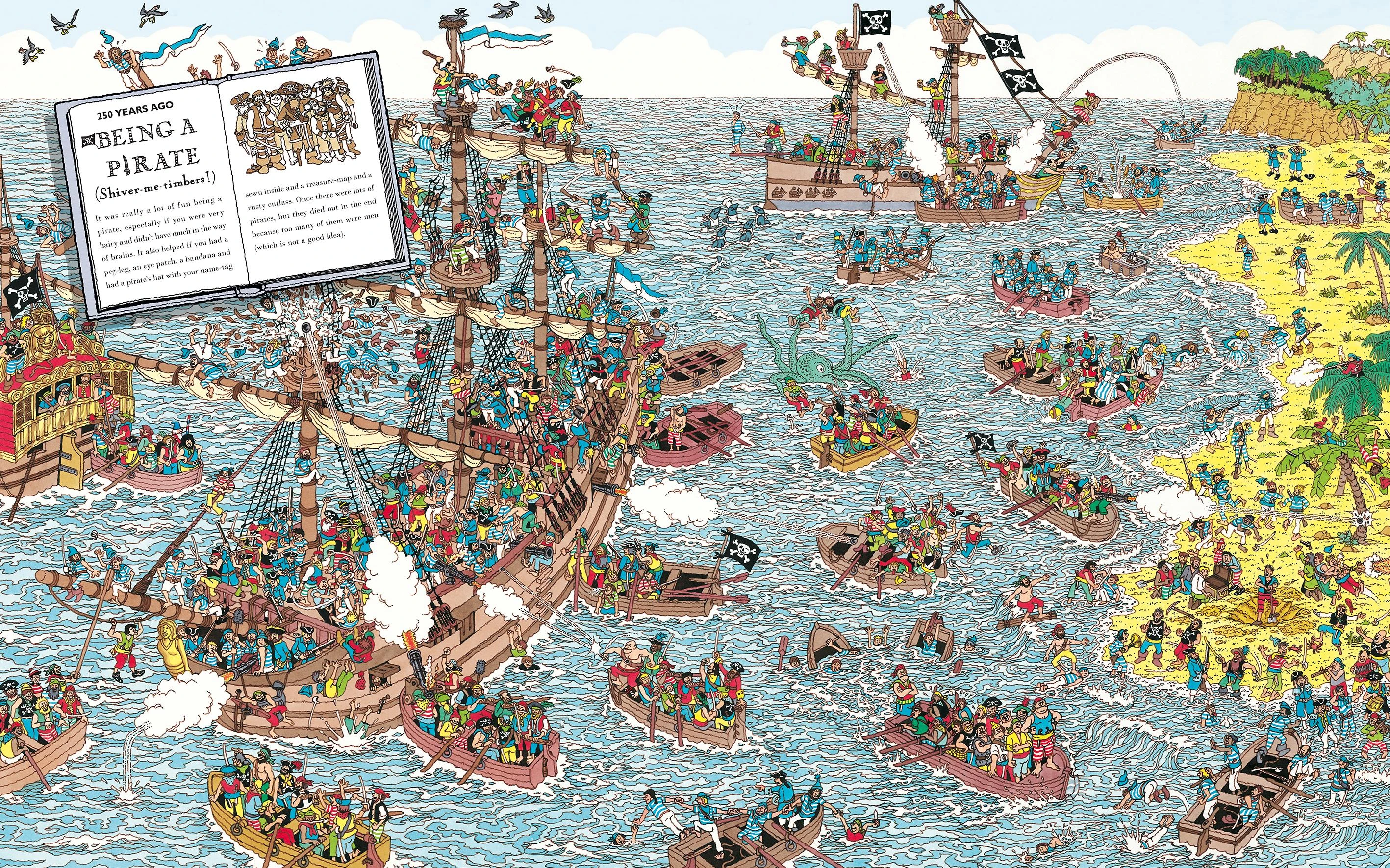
Level 6 throws you straight into a high-energy pirate battle where everything feels loud, fast, and unpredictable. Ships are clashing, cannons are firing, and crews are scattered across decks and boats. Unlike previous levels that stay grounded in one place, this scene spreads across water, ships, and shoreline, creating multiple layers of action at once.
At first glance, your attention might jump toward the larger elements like ships and explosions. But focusing only on those can actually make things harder. The real challenge lies in the smaller, less obvious details hidden between all that movement.
Too Much Action, Not Enough Focus
What makes this level tricky is the constant sense of motion. Even though the image itself is still, everything inside it feels active. Figures are positioned in ways that suggest movement—running, climbing, fighting—which can distract your eyes from staying steady.
On top of that, there are many overlapping elements. Ropes, sails, wooden planks, and groups of pirates all blend together. This layering effect creates natural hiding spots where characters can disappear without being obvious.
Shifting Your Attention
Instead of trying to process the entire scene at once, it’s better to narrow your focus. Pick one ship or section of water and explore it fully before moving on. Treat each part of the scene as its own small puzzle rather than trying to solve everything at the same time.
You can also use vertical scanning here. Start from the top of a ship—like the sails—and slowly move downward toward the deck. This helps you avoid skipping areas and keeps your search more controlled.
Finding Patterns Within the Noise
Even in chaos, patterns still exist. Ships have structure, and so do the groups of characters. Once you start recognizing these patterns, it becomes easier to spot something that doesn’t quite fit.
Pay attention to edges—places where two elements meet, like the border between a ship and the sea or between different groups of characters. These transition areas often hide subtle details that are easy to overlook.
Also, don’t rely only on color. The scene is full of strong tones—blue water, brown wood, bright clothing—so colors repeat often. Instead, focus on shapes and positioning. A small detail that feels slightly out of place is usually worth a closer look.
If you’re looking to improve how you approach scenes like this, checking out some tips to play waldo can give you useful ways to stay focused even in highly detailed environments.
Let the Scene Settle
There’s a moment in this level where everything starts to feel less overwhelming. Once your eyes adjust to the density of the scene, the chaos becomes more organized. You begin to notice gaps, patterns, and differences that weren’t clear before.
That shift is what makes this level interesting. It’s not just about spotting characters—it’s about learning how to stay calm and focused when everything around you feels busy.