


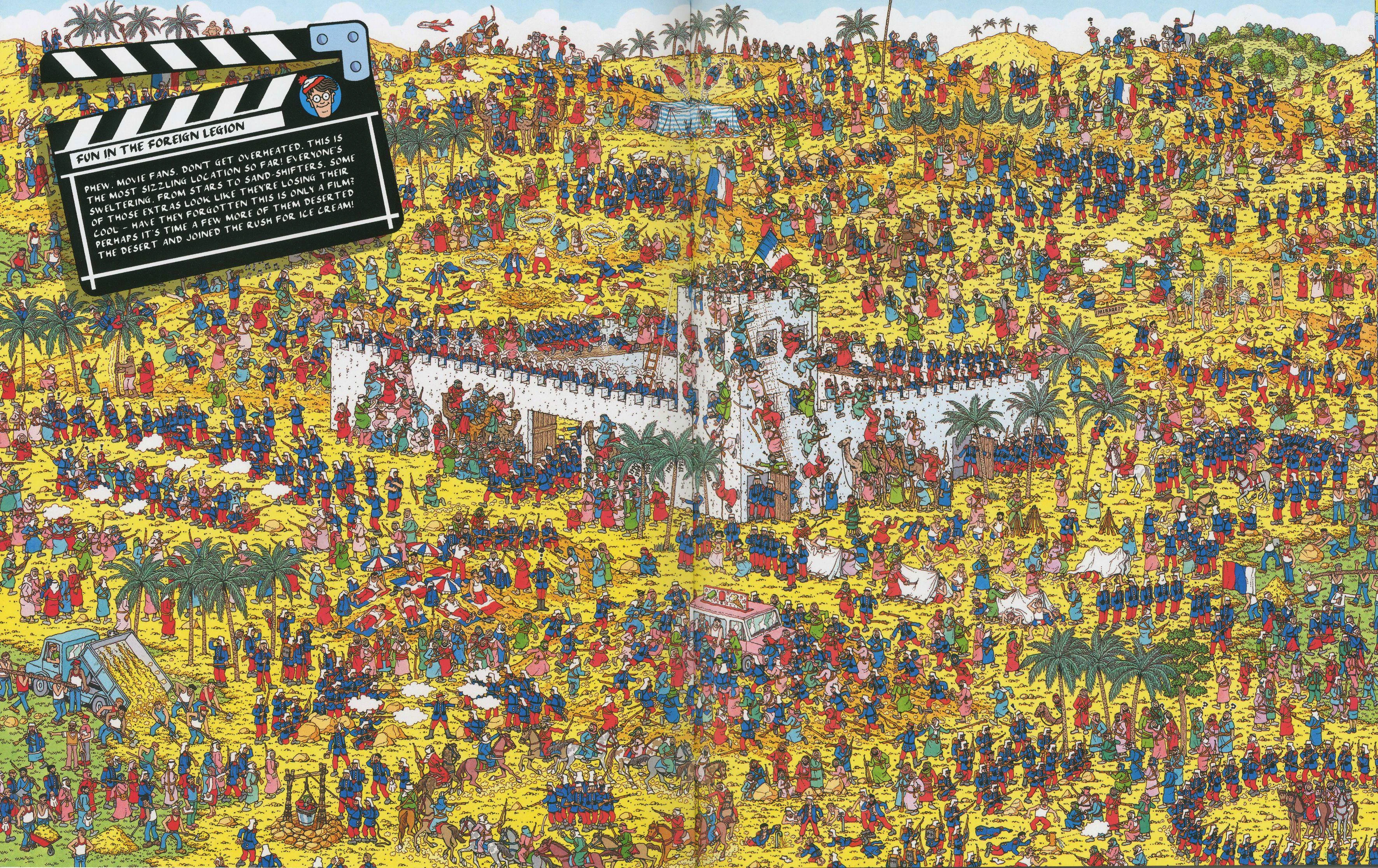
Where’s Waldo Level 12 – Desert Siege
Level 12 moves away from crowded towns and takes you into a wide desert battlefield where activity is spread across open land. At first glance, the space feels less packed, with more breathing room between groups. But that openness comes with its own challenge—the details are easier to miss because they are scattered rather than clustered.
You’ll notice soldiers, tents, and groups moving in different directions, all surrounded by the same sandy tones. The environment doesn’t overwhelm you with color, but instead creates a subtle visual blur where everything starts to look similar over time.
Why the Desert Feels Deceptive
Unlike tighter scenes where everything is compressed, this level makes your eyes travel more. That constant movement can break your focus if you’re not careful. Because there are fewer strong visual anchors, it becomes harder to decide where to begin.
Another factor is the color palette. The warm tones of the desert—browns, yellows, and light shadows—blend together, making it difficult to quickly separate characters from the background.
Here are a few things that naturally increase the difficulty:
- Large open areas that encourage fast, unfocused scanning
- Repeating textures from sand, clothing, and tents
- Groups that appear smaller due to distance and spacing
Slowing Down the Search
This level rewards a slower and more deliberate approach. Instead of trying to cover the entire scene quickly, it’s better to guide your eyes in a steady direction. Choose a starting point—either a corner or a clear landmark—and move gradually from there.
Pay attention to areas where activity gathers. Even though the desert is open, people still form small clusters around tents or movement paths. These spots often hold details that are easy to skip if you move too quickly.
Looking Beyond Color
Since the scene uses similar tones throughout, relying on color won’t help much here. Instead, shift your attention to shapes and positioning. Notice how figures are arranged, how they interact with their surroundings, and whether something feels slightly out of place.
Small differences matter more in this level than bold visual cues. A slight variation in posture or spacing can be enough to guide your eyes in the right direction.
When the Scene Starts to Settle
At first, the desert may feel empty yet confusing at the same time. But as you continue looking, your eyes begin to adjust. The scattered layout becomes easier to follow, and the movement across the scene starts to feel more organized.
Instead of searching randomly, you’ll find yourself naturally moving from one area to another with more control.
Once you get into that rhythm, the real fun begins. If you enjoy this kind of focused searching and want to explore more immersive scenes, you can play where's Waldo game right now and test your observation skills across even more creative environments.
A Calm but Demanding Challenge
This level stands out because it removes obvious distractions and replaces them with subtle complexity. It teaches you how to stay focused even when there isn’t a clear path to follow. Once you adapt to that rhythm, the search becomes smoother—and far more satisfying.